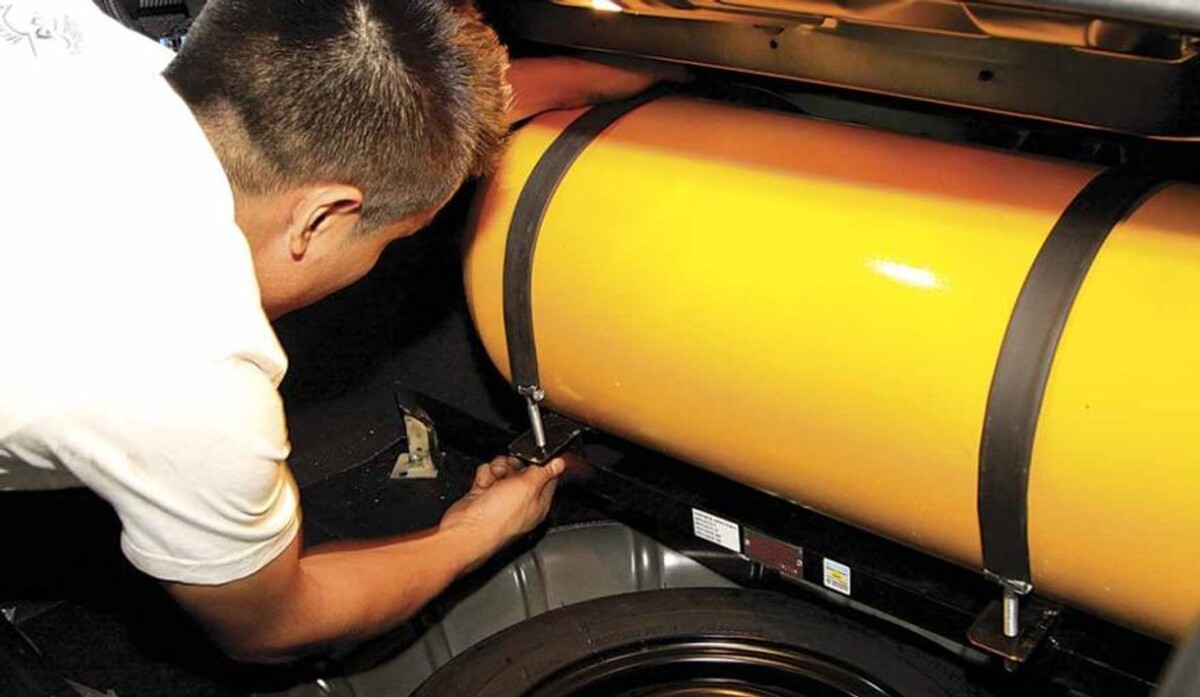
Since Javier Milei's government took office, fossil fuel prices at the pumps have increased by 400%. Filling a standard tank (55-60 liters) now costs over 118,000 pesos for gasoline and over 133,000 pesos for diesel. It's no surprise that the conversion to CNG increased by 40% in March compared to February and by 70% compared to the same month last year. Argentina ranks among the countries with the highest gasoline price increases in the region, surpassed only by Peru, Guatemala, and Panama amid the Middle East conflict, as confirmed by the Argentine News Agency. A liter of gasoline costing over 2,000 pesos has accelerated a reassessment of finances that had already been underway since last year to determine the convenience of gasoline, diesel, or CNG vehicles, and it has triggered inquiries for installing gas equipment. Not only are those interested in fitting their gasoline cars with gas tubes inquiring, but drivers who are changing cars and transferring their existing equipment to new vehicles are also approaching specialized workshops. According to ENARGAS, the average number of conversions last month approached 300 per province. In Buenos Aires province alone, there were 3,795 conversions to CNG in March. A 60% savings. Calculations show a 60% savings, as 10 liters of fuel for a car cost 22,000 pesos, while a 40-liter CNG tank, equivalent to 10 liters of gasoline, costs 9,000 pesos. A revival of the CNG boom seen after the 2001 crisis, driven by the increase in gasoline prices, is now taking shape. The final price of CNG is 35-40% lower than gasoline in the AMBA metropolitan area, and the gap widens to 50% in the interior of the country. Gasoline is priced at 2,000 pesos and CNG at 600, reaching this gap because the increases were 25% and 10-15%, respectively. Currently, the wellhead gas purchased by stations costs around 10% of the price at a YPF station in Buenos Aires City, and to this value are added the costs of distribution, the electricity used to compress the gas, and the station's expenses like salaries. The installation of gas equipment costs around 1.5 million pesos, with payment options that include 12 and 24-month plans, as well as bank financing. For intensive use, such as in ride-hailing, taxis, or remises, this cost can be amortized in a few months. For a private individual who drives 10,000 kilometers a year, it would take a little over a year. An emblematic case analyzed by specialists is that of ride-hailing drivers. A driver with high turnover can achieve a daily saving of 30,000 pesos, which represents an indirect gain of 900,000 pesos monthly. The most widely used equipment, specialists point out, is the 'fifth generation', consisting of a 40, 58, or 65-liter cylinder, with values ranging from '1,100,000 to 1,350,000 pesos'. The return on investment is completed in just a month and a half of work. These systems, they add, 'start on fuel and work on gas', so the switch to CNG is automatic. In this case, it also includes an external fill valve so that customers have the option to refuel from the rear of the vehicle. The constant increases in gasoline prices initially caused a sharp drop in demand, especially for premium gasoline, and consequently, alternatives like CNG started to gain ground. CNG consolidated itself in 2025-2026 as a strategic and economic alternative to diesel for freight and passenger transport in Argentina, driven by the availability of national gas and significant operational savings. The system has strategic corridors (NOA, Center, Patagonia) and more than 500 enabled service stations. Buses have been added to CNG in the public transport of the AMBA and Pilar, seeking to modernize the fleet and reduce the environmental impact. CNG is used for large trucks, achieving remarkable operational savings on long distances. There are key road corridors (Routes 3, 5, 33, 225, and others) that connect the north, the center, and the Vaca Muerta area, facilitating long-distance supply. Vaca Muerta is consolidating as the engine of gas supply in Argentina, covering the growing demand for CNC and allowing milestones such as the first hydraulic fracture supplied with YPF's own CNG in 2025.